ANDROGENETIC ALOPECIA IN WOMEN
10.05.2021
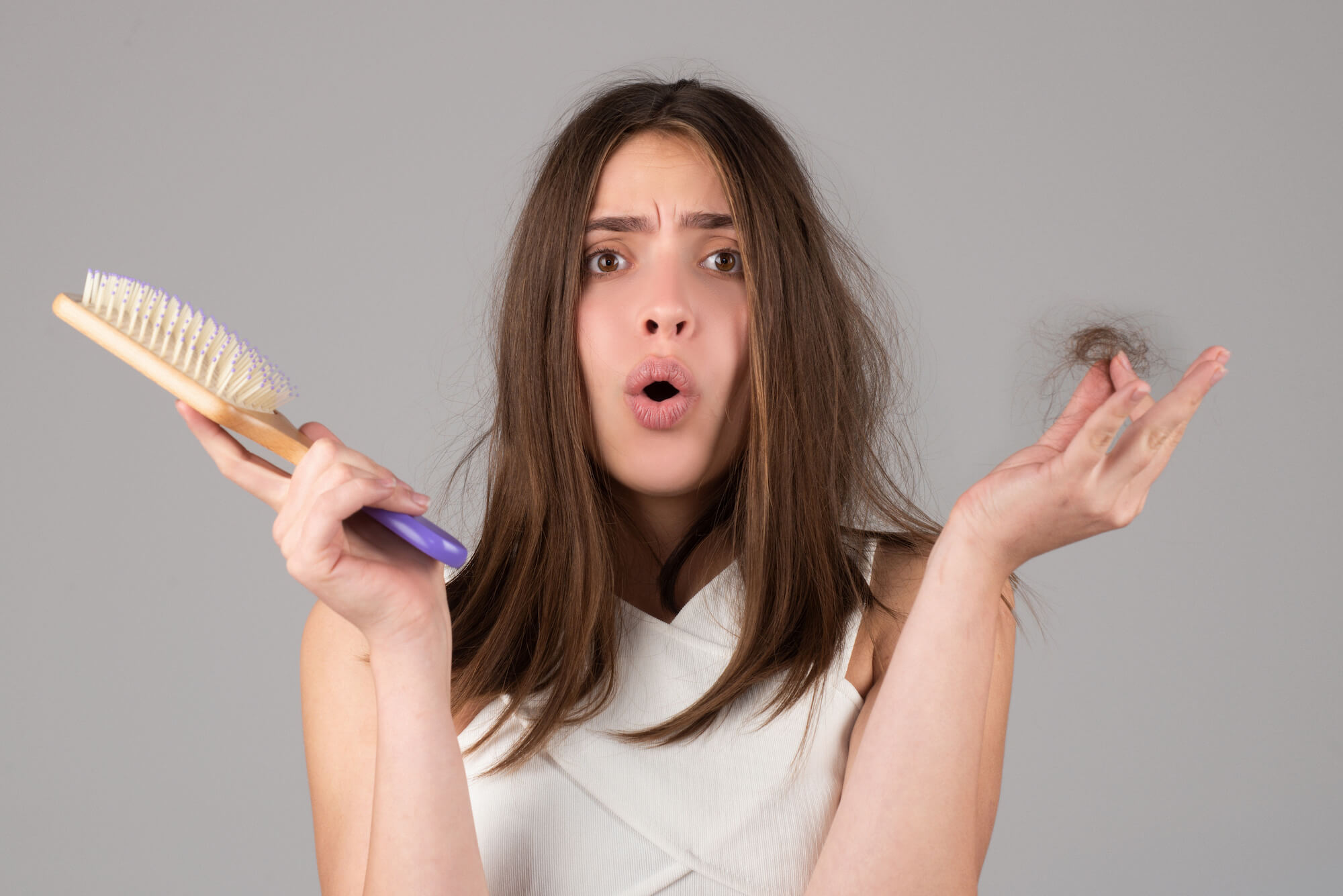
ANDROGENETIC ALOPECIA IN WOMEN
Androgenetic alopecia (AHA) is one of the most common causes of hair loss. The question of its treatment is of concern, perhaps, to all who have encountered this problem. Do not despair and give up — this type of disease is being treated today. Androgenetic alopecia is a condition characterized by two processes. On the one hand, the miniaturization (reduction in size) of the hair develops, on the other hand, the destruction of the hair follicle. In each hair follicle, there are receptors for sex hormones, androgens, which, in turn, are produced by the sex glands, the adrenal cortex, as well as in the tissues under the action of the enzyme 5 a-reductase.
It is 5 a-reductase that converts androgens, such as testosterone, into dihydrotestosterone( DHT), an aggressive hormone that is 5-10 times more active than the testosterone molecule. Thus, DHT is produced both remotely, getting into the skin with the blood flow, and directly in the hair bulb itself.
AHA can develop without increasing the level of DHT, if there is an increased sensitivity of the hair follicles to androgens. This condition is inherited genetically and is manifested by a violation and disorder of protein synthesis, hair nutrition. Thats the reason why the hair is thinning, turning into fluffy and falling out.
Clinical hair loss is most pronounced when there is a violation of the balance of sex hormones in the direction of increasing DHT. There is a shortening of the active phase of hair growth (anagen). That is, the hair lives its “life” 10 – 20 times faster than normal. And, having lost it, the body is in no hurry to “reproduce” a new hair in its place, as it happens normally. As a result – baldness.
The state of hypothyroidism increases the progression and clinical picture of AHA, since with a decrease in the function of the thyroid gland, there is a violation of the production of sex hormones.
TYPES OF ANDROGENETIC ALOPECIA
In women, there are three types of androgenetic alopecia:
1. Diffuse hair loss on the top of the head while maintaining the frontal hairline (Ludwig model);
2. Christmas tree-type hair loss;
3. Thinning associated with bitemporal receding hairlines (Hamilton model) is more common in women with hyperandrogenism and in menopause.
DIAGNOSTICS
TRICHOSCOPY AND MONITORING OF THE GENERAL CONDITION OF THE BODY
Sometimes the first and only sign at an early stage of AGA is the presence of hair of different diameters due to the effect of miniaturization. At later stages, there is a change in the width of the parting, a decrease in the volume of the hair. As a rule, by this time the patient has already lost about 30-50% of their hair.
In addition to the trichoscopy, it is necessary to monitor the general condition of the body. Exclude polycystic ovarian syndrome and early menopause in women. Check the levels of sex hormones, glucose, insulin, exclude the deficiency of certain vitamins and trace elements. Do not be surprised if your doctor asks you to undergo a gynecological ultrasound.
To diagnose and treat the condition you have to test following hormones:
1. Testosterone free and bound;
2. DHT (Dihydrotestosterone);
3. DHEA (Dehydroepiandrosterone sulfate);
4. Estradiol;
5. Androstenedione;
6. Cortisol;
7. Insulin;
8. Thyroid hormones.
TREATMENT
Treatment is aimed at reducing DHT and the activity of the enzyme 5 alpha reductase.
Therapy for AHA should be started as early as possible. After all, there is a violation not only of the growth of the hair itself, but also the destruction of the follicle with the development of fibrosis. And if you miss precious time, even a hair transplant will not help.
Remember, TIME = HAIR!
Not even the most expensive therapy will have its effect if you do not change your lifestyle and eating habits!
Change your lifestyle and eating habits before starting theraphy:
– Maintain a diet with a low glycemic index. Give up sweets and lead the most healthy lifestyle! A healthy diet is the first step towards treating alopecia. The quality of food can affect the hormonal background, especially in the presence of endocrine disorders. Give preference to fresh vegetables, fatty fish, nuts and oils (butter, olive, coconut), seaweed.
– Stop consuming dairy products. Cow’s milk increases the level of dihydrotestosterone in the blood, one of the most aggressive androgens that lead to hair loss.
– Stop worrying. Chronic stress has never made anyone younger or prettier. So meditation, yoga, relaxation will be great helpers for you on the way to recovery.
– Stop smoking. This addiction leads to an increase in androgen levels, thereby contributing to hair loss.
– Eat more foods containing Zinc. Zinc plays an important role in the process of hair growth and restoration. Alopecia is a common symptom of its deficiency.
– Consider supplements like vitamins and trace elements. In a complex therapy program, vitamins A, D, C, and B are particularly important, especially vitamin B3/niacin, magnesium, and omega-3 fatty acids can lower testosterone in women.
– You have to take the amino acids lysine, cysteine, methionine and taurine contribute to the formation of a healthy hair matrix.
– Take Saw Palmetto (or dwarf palm extract), as well as green tea extract, contain phytoesterols that help reduce Dihydrotestosterone levels.
1. Sex hormone therapy
Sex hormones give the hair volume, strength and silkiness. When we are young, estrogens and testosterone give us beautiful, healthy hair. With age, the level of sex hormones decreases and by the age of 50 is about half of what was available in 20 years. And conditions such as stress, lack of sleep, polycystic ovarian syndrome, oral contraceptives, excess weight and obesity accelerate the natural aging process. As a result, the ratio of testosterone/estrogen/ progesterone /DHT changes towards DHT, leading to hair loss.
Normalization of the level of sex hormones leads, as a rule, to the restoration of hair growth.
The use of drugs to block the enzyme 5 a-reductase should be carried out under strict medical supervision, as it is associated with a number of side effects, including genital atrophy in women.
Local therapy, which you need to be very careful with!
2. Minoxidil is a drug for the treatment of AGA
It is recommended to apply daily every 12 hours. Approximately 40% of patients after a couple of months of use may stop hair loss and the first fluffy hair will appear. This is the end of the advantages.
The disadvantages, in my opinion, are much more. More than half of the patients are not sensitive to minoxidil. Fluffy hair, most likely, will not turn into terminal hair ever. Resistance to therapy will appear very soon. You will have to increase the concentration to higher doses, which is fraught with consequences in the form of seborrhea and dermatitis. Withdrawal syndrome, in the case of refusal of therapy, occurs very soon.
What has been grown by the backbreaking labor of months of therapy will leave your head in a matter of weeks. So what should I do? Combine the use of Minoxidil (always in low concentrations) with additional local therapy (5 alpha reductase inhibitors, melatonin, vitamin D, sex hormones: estrogens, testosterone and progesterone).
3. Antifungal Shampoo
Antifungal shampoos in addition to the main therapy can enhance the effect due to antiandrogenic properties.
4. Topical use of melatonin
Melatonin is a hormone produced in the epiphysis or pineal gland. Its main function is not only to control sleep and biorhythms, but also to normalize the production of thyroid hormones and sex hormones. It also affects the production of Serotonin, a hormone that increases memory, attention, and mood.
In addition to all of the above, melatonin is able to slow down the processes of not only aging, but also to control pigmentation and hair growth. Its insufficiency leads to hair loss and thinning (melatonin blocks the action of androgens in the hair follicle), early gray hair.
At risk of melatonin deficiency are those whose work is associated with frequent changes in time zones, night shifts (medical staff), young mothers.
Melatonin is produced at night in absolute darkness from 23.00 to 2 am. That is why early bedtime is so important.
Normalizing sleep helps eliminate many of the symptoms of melatonin deficiency. In my practice, for the treatment of hormonal causes of alopecia, I often prescribe prescription drugs with melatonin in the form of a spray and hair lotion.
5. Laser treatment
Low-intensity laser helps accelerate the growth of newly grown hair. It provides stimulation of local blood circulation for oxygen saturation and treatment of lack of nutrition of hair follicles.
6. Peptide therapy
Growth Factors/Peptides are signaling molecules that transmit impulses to cell receptors. They give an incentive to cells to renew and accelerate growth. As a result-thickening of the hair and lengthening of its life cycle.
Peptides of zinc and copper, thymus, as well as insulin-like growth factor-block enzymes that affect the acceleration of the life cycle of the hair and its loss. And also stimulate the follicle for hair growth.
Benefits of peptide therapy:
- Healing of injuries;
- Lengthening of the anaphase and the life cycle of the hair;
- Activation of the immune function of the skin;
- Stem cell activation;
- Suppression of inflammatory processes;
- Enhanced synthesis of collagen and elastin;
- Stopping hair loss;
- Smoothing of scar tissue.
As you can see, today there is a wide arsenal of tools and opportunities for the treatment of androgenetic alopecia. The main thing is not to waste precious time and start treatment as early as possible. By contacting a doctor in time, you will be able to restore the beauty and health of your hair.
Begin with a Preliminary Medical Review
By Appointment Only